The surgical waiting room on the third floor of Millbrook Memorial smelled of antiseptic lemon cleaner and burned vending-machine coffee.
At 2:15 AM, only four chairs out of thirty were occupied.
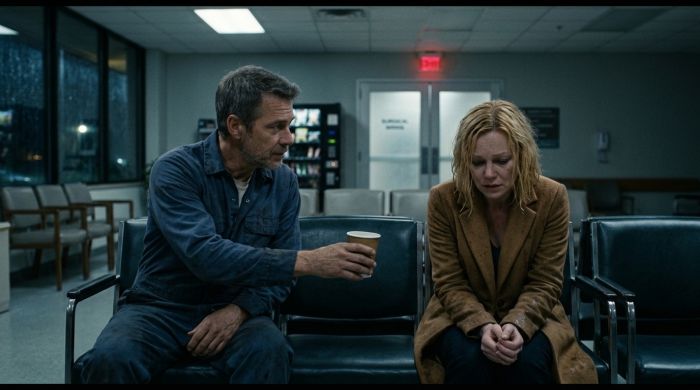
Art sat near the corner window in his damp boots, cradling two paper cups of black coffee. He set one on the low plastic table beside Claire's elbow without a word.
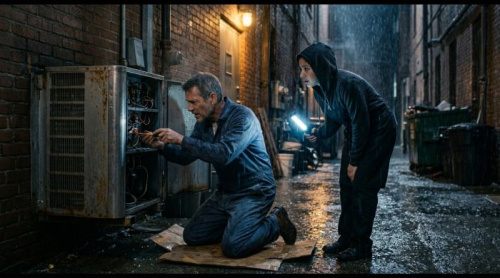
Claire hadn't touched her phone in forty minutes. Every time she tried dialing her backup refrigeration contractor, the call went straight to an automated night message.
"He's nineteen," she murmured to the floor, her voice hollow. "He only drove out to Columbus because I told him not to miss a networking dinner with the Sterling boy."
Art took a slow sip of coffee. "Kids drive fast in the rain when they're trying to please their parents. Doesn't make you a monster. Just makes tonight long."
Claire looked up sharply, as if waiting for the sarcasm to land.
There wasn't any.
That quietness unsettled her far more than anger ever could.
"Do you even remember what year it was?" she asked softly, gripping the edges of her wool coat.
Art didn't pretend not to know what she meant.
"November, fifteen years back," he said calmly. "Two weeks before Thanksgiving."
Claire swallowed hard. Her fingers tightened around the paper cup until the lid popped loose.
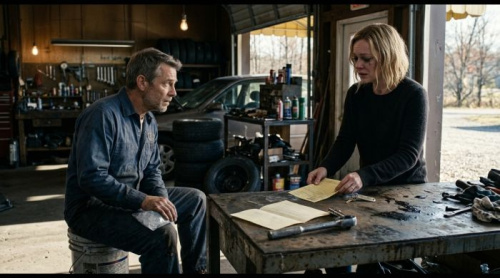
Fifteen years ago, Callahan Transmission had held the maintenance contract for four city utility vans and two park trucks.
It wasn't glamorous work, and the profit margin was razor-thin, but it kept the mortgage paid on Art's modest ranch house while Nora battled stage-three breast cancer.
One Tuesday morning, a junior clerk at City Hall misfiled a brake-pad purchase order for $380, flagging Art's shop as "unverified billing" during an annual audit.
Art brought every receipt to the municipal office within two hours.
It shouldn't have been more than a five-minute correction.
Except Claire Mercer had just been named chairwoman of the Millbrook Civic & Fleet Oversight Committee—her big step up from caterer to town gatekeeper.
She wanted to replace the old small-town vendors with a regional dealership owned by Grant Sterling's brother-in-law.
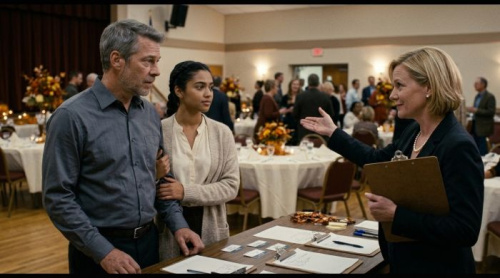
At the Friday civic luncheon, when Art stood near the back wall in his clean work shirt hoping to hand her the corrected folder, Claire didn't look at his papers.
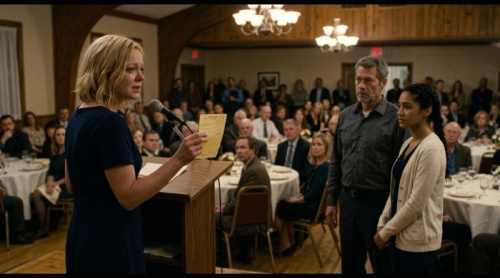
She stepped up to the podium, held up the flagged audit sheet, and spoke cleanly into the microphone.
"If a man can't manage the paperwork on a two-bay garage," she told forty local business owners, "the city shouldn't be handing him keys to municipal vehicles."
Two trustees chuckled awkwardly. Art tucked the folder back under his arm and walked out before the salads were served.
The loss of that contract hit the very next month.
To keep Nora in her clinical trial without touching Maya's small college fund, Art sold his 1978 Ford Mustang to a collector in Dayton, picked up overnight diesel rebuilds for interstate haulers, and slept four hours a night on the vinyl sofa in his office.
When Nora passed away four years later, Art kept working the same twelve-hour days.
When his left meniscus tore lifting a transmission housing in 2021, the orthopedic clinic told him he needed six weeks off his feet after surgery.
Maya was in her sophomore year of nursing school then. Six weeks closed meant losing two regular fleet accounts.
So Art bought a sixty-dollar neoprene knee brace at the pharmacy, wrapped it tight every morning at five, and told Maya his knee was "just stiff from old weather."
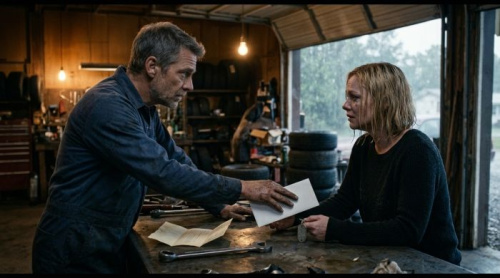
"I didn't know Nora was sick," Claire whispered now in the fluorescent quiet of the waiting room.
"You didn't ask," Art said simply. Not cruel. Just true.
Claire closed her eyes, a hot flush of shame creeping up her neck.
"Why did you open the door tonight?" she asked.
Art set his cup down and leaned back against the vinyl chair.
"Because fifteen years ago, I decided I wasn't going to let one bad afternoon turn me into somebody I didn't recognize," he said. "And because I know what it feels like to sit in this exact room praying for a green light above that door."
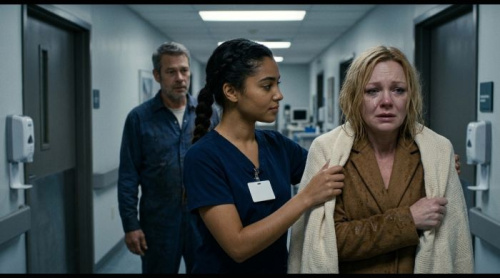
At 3:05 AM, the double frosted doors at the end of the corridor finally swung open.
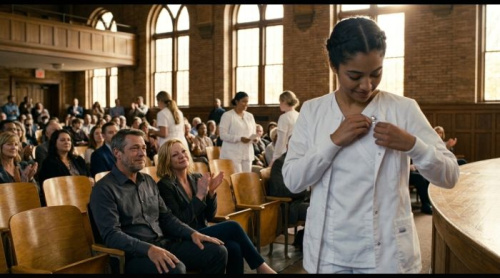
Dr. Patel stepped out in pale green scrubs, pulling his surgical cap loose—and walking three paces behind him, carrying a laminated clinical clipboard under her arm, was a twenty-two-year-old nursing student with Art's exact steady brown eyes.